

By Julia W.
File Under Marketing Question New Practice Growing Practice
tap my beautiful face to learn about me

By Julia W.
File Under Marketing Question New Practice Growing Practice
Building a wellness practice requires more than clinical skills – it thrives on connections. Online networking has become a key tool for professionals in wellness fields to grow their practices, gain referrals, and combat isolation. Here’s a quick guide to leveraging digital platforms effectively:
The goal is simple: build genuine relationships that lead to referrals, support, and collaboration. Focus on consistent small actions – like updating your profiles or scheduling chats – to grow your network over time.
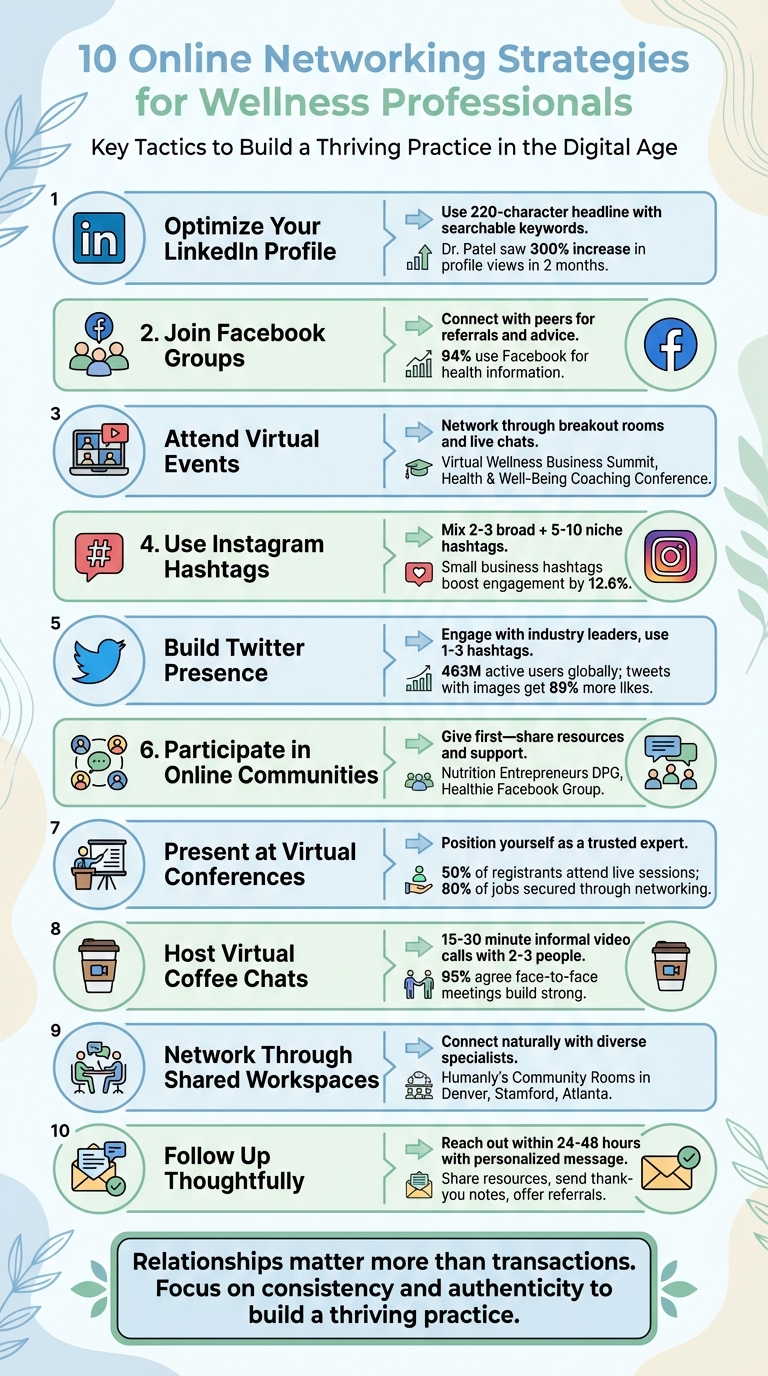
10 Online Networking Strategies for Wellness Professionals
Creating a standout LinkedIn profile is a critical step in building a network that supports your wellness practice. Think of your profile as your digital storefront, a space that does much more than list your credentials. With over 810 million members spanning 200 countries and 170 industries, LinkedIn offers wellness professionals an incredible opportunity to connect with clients, collaborators, and referral sources. The trick? Treat your profile like a landing page, not just a resume.
Start with your headline – it’s one of the first things people notice. With 220 characters to work with, focus on keywords that your ideal clients or partners might search for. Instead of using vague titles like "Wellness Coach", go for something specific and searchable, like "Licensed Therapist" or "Registered Dietitian." Try this formula:
"Helping [audience] achieve [outcome] through [expertise]."
For example:
"Helping busy professionals overcome burnout | Licensed Counselor | Stress Management Specialist."
Even small changes here can make a big difference. For instance, in September 2025, Dr. Patel, a cardiologist, updated her headline to emphasize her expertise in "heart failure in women" and her patient-focused approach. Within just two months, her profile views skyrocketed by 300%, opening doors to advisory board roles, speaking gigs, and even a book deal.
"Your profile is not for you, it’s for your prospective client. Be clear, concise, and personable. Speak directly to prospective clients."
- Chelsea Jay, Leadership Development and Career Coach, Chelsea Jay Consulting
After grabbing attention with your headline, use the About section to deepen interest. This section allows up to 2,600 characters, but the first 3–4 lines are crucial since they’re visible before someone clicks "see more". Write in the first person, sharing your story and what drives your work in wellness. Explain your approach to care and end with a clear call to action, like "Schedule a free consultation at [your website]." For those in clinical roles, you can also include data to showcase your impact – just ensure it’s HIPAA-compliant. For example, you might note how you improved patient satisfaction scores from 78% to 94% over two years.
Don’t forget the Featured section. Use it to showcase free resources, published articles, or recordings of workshops that demonstrate your expertise. Pair these with a professional, approachable profile photo and a custom banner featuring your name, tagline, and credentials. Tools like Canva can help you create polished visuals. When combined with strategic keywords, these elements make your profile more discoverable – and unforgettable – when the right people come searching.
Facebook groups are a powerful way to connect with peers, gain referrals, and share business advice. With 94% of people using social media for health information turning to Facebook specifically, these groups have become vital spaces for wellness professionals like therapists and nutritionists. Unlike scrolling through a feed, these communities are built for sharing practical solutions to challenges like insurance billing, burnout, and creating a thriving practice.
To get started, use Facebook’s "Groups" tab or search for specific keywords like "Denver Addiction Professionals" to find relevant communities. A good strategy is to join a mix of local groups for community-based referrals and larger ones like All Things Private Practice or Abundance Practice Building for broader insights. Some of the best groups are hidden, meaning you’ll need an invitation from a current member and may have to answer screening questions to join. Once you’re in, focus on contributing meaningfully instead of promoting yourself.
Michael Fulwiler, a marketing expert, explains it well:
"One of the best ways to get clients and grow your business is to network with other therapists. And one of the best ways to network with other therapists is through Facebook Groups".
Engage by answering questions, sharing helpful resources, and offering support. Groups like Simple Profit for Mental Health Clinicians provide guidance on tax and accounting, while Clinicians of Color in Private Practice offers support tailored to specific communities.
Make sure to review group rules before posting, and decide whether to participate using your personal profile or Business Page, depending on admin preferences. Use common questions in the group as inspiration for your own content, and consider inviting active members to a virtual coffee chat to build deeper connections.
Virtual events have made it easier than ever to connect with wellness professionals across the country, all without the hassle of travel. With many conferences adopting hybrid or virtual-first formats, you can now join interactive live streams from the comfort of your office or home.
There’s a wide range of events to choose from, catering to different budgets and professional goals. For example, the Virtual Wellness Business Summit (April 7–8, 2026) focuses on business strategies and client care tips, while the Health and Well-Being Coaching Conference (September 25–27, 2026) offers 18 NBHWC credits and 60-day on-demand access. Another option is the 2026 Psychotherapy Networker Symposium (March 19–22, 2026), which provides extended CE hours for $299.99. Whether free or ticketed, these events offer valuable opportunities to learn and connect.
Networking is a key benefit of these virtual meetups. Breakout rooms, for instance, are great for sparking meaningful connections. Danielle Brody, Networking Events Director at AMA New York, points out that virtual sessions can inspire career growth and collaboration. A great example: in April 2021, an AMA New York member met a freelance writer from Tennessee during a breakout session and later hired him for a project.
To make the most of these networking opportunities, it’s important to prepare. Update your LinkedIn profile and website before the event to ensure your digital presence is polished. During the event, engage actively in chat feeds with thoughtful questions like, “What’s been your favorite session so far?” or “I’m looking to improve my intake process – any tips?” Michelle Muñoz, LMFT, suggests building a supportive professional network to combat the isolation of private practice and enhance your skills as a clinician.
Finally, don’t let those connections fade. Follow up within 24–48 hours with a personalized message that references a specific conversation point from the event. This small step can turn a brief interaction into a lasting professional relationship.
Instagram hashtags are an easy, no-cost way to showcase your content to wellness professionals and potential clients who haven’t discovered you yet. The secret lies in striking the right balance between widely-used tags for visibility and niche-specific ones that attract a more engaged audience.
To get started, mix and match your hashtags strategically. Use 2-3 broad tags like #wellness or #healthylifestyle to cast a wide net, and pair them with 5-10 niche-specific tags such as #holistichealth, #guthealth, or #functionalmedicine to target people interested in your expertise. Add professional tags like #healthcoach or #nutritionist to clarify your services, and include location-based tags like #NYCWellness if you’re aiming to connect with local clients. This combination ensures both reach and relevance – broad tags attract more eyes, while niche tags engage those who care about your specific focus.
"The trick is to use a few generic and a few niche specific hashtags to give you the best reach – just make sure they are always relevant to the photo, video or story you’ve posted." – Hopper HQ
Although Instagram allows up to 30 hashtags per post, using 5-15 well-chosen ones often delivers the best results for wellness content. Avoid repeating the same set of hashtags in every post, as this can trigger Instagram’s spam filters. Instead, create 3-4 hashtag sets and rotate them. Whether you place hashtags in your caption or the first comment doesn’t seem to impact reach, so choose what works best for you.
Before using a hashtag, search for it on Instagram to ensure it hasn’t been flagged or banned – using restricted tags can hurt your visibility. You can also join trending themes like #WellnessWednesday or #SelfcareSunday to connect with larger community conversations. Studies even suggest that including small business hashtags can boost engagement by as much as 12.6%, making this a simple yet effective tool for networking and growth.
Twitter connects wellness professionals to a massive audience – about 463 million active users globally, including one in five U.S. adults. Think of your profile as your digital handshake. Start by uploading a clear, professional headshot (400×400 pixels) and a header image (1,500×500 pixels) that reflects your brand. Your bio, limited to 160 characters, is like a quick elevator pitch. Use it to highlight your specialty, location, and include a link to your website or LinkedIn profile. Once your profile is polished, the real work begins: active engagement.
Engagement is everything. Respond to tweets from industry leaders, add thoughtful comments, and retweet with your own insights. This type of interaction fosters real connections. Communications strategist Amy Lynn Smith explains, "When you mention somebody, they’ll often retweet you if you’ve said something nice about them. That kind of reciprocity is what makes Twitter successful". You can also join Twitter Chats – like those hosted by the National Institute of Mental Health (NIMH) – or participate in Twitter Spaces to establish your voice in the wellness community.
"If you use it right, Twitter can be one of the most powerful tools for professional growth."
- Arif Akdogan, Digital Marketer, Circleboom
Visuals can amplify your reach. Tweets with images get 89% more likes and 150% more retweets. Pair those visuals with 1–3 hashtags per tweet. Use a mix of broad tags like #wellness or #mindfulness and more specific ones like #healthcoach or #DepressionHelp. Keep hashtags under 18 characters for better engagement. Pin your top-performing content – whether it’s a popular thread, a recent article, or an announcement – to the top of your profile for maximum visibility.
Consistency matters. Tweet daily to stay visible and build trust. Use Twitter Lists to organize conversations by topic, helping you track trends and join discussions without getting overwhelmed by your feed. But remember, it’s not just about self-promotion. Benjamin Miller, PsyD, from the University of Colorado School of Medicine, advises against only sharing your own achievements, as it can make your presence feel one-sided. By staying active and authentic, you’ll strengthen your Twitter presence and complement efforts on other platforms.
Expand your professional reach by engaging with online wellness communities. These specialized spaces, like Facebook Groups, LinkedIn Groups, and Meetup, offer opportunities for deeper, more focused interactions compared to broader social media platforms. For instance, the Nutrition Entrepreneurs Dietetic Practice Group, part of the Academy of Nutrition and Dietetics, provides virtual mentorship and meetups tailored to nutrition professionals. Similarly, groups like the Healthie Facebook Group and the Headway provider Facebook group are excellent spaces for sharing business tips and troubleshooting practice tools. By joining these communities, you lay the groundwork for trust and collaboration through active engagement.
To truly benefit, don’t just observe – participate actively. Ask thoughtful questions, contribute to discussions, and provide meaningful feedback. This kind of visibility positions you as a reliable and knowledgeable professional, making it more likely that peers will think of you for referrals or advice. Natalia Tague, Therapist and Clinical Lead at Headway, highlights the value of these connections:
"Having a community of peers who share in your challenges can be a great source of support, both personally and professionally".
Take a "give first" approach. When someone shares a challenge – whether it’s burnout or a slow period in their practice – offer a helpful resource, a connection, or even just words of encouragement. This generosity fosters authentic relationships, which can grow into strong professional networks. Make sure your online profiles clearly reflect your expertise to reinforce your credibility.
Finding the right communities is easier with specific searches like "[your license] events" or "online [specialty] therapist group." Once you’re part of a group, take it a step further by inviting members to virtual coffee chats to deepen connections. These communities can also act as referral networks. For example, nutritionists might collaborate with gastroenterologists, psychologists, or physical therapists to create complementary partnerships.
Presenting at virtual wellness conferences isn’t just about sharing your expertise – it’s a chance to build trust and form meaningful connections. These events let you connect with audiences across the country or even the globe, breaking down geographical barriers. Whether you’re engaging with peers, potential collaborators, or clients, being a presenter positions you as a trusted voice and complements other networking strategies like attending virtual meetups.
The benefits don’t stop at the presentation. About 50% of registrants typically attend live sessions, which means you have a golden opportunity to capture leads. Use tools like email sign-ups, downloadable resources, or consultation offers to turn your audience into long-term connections. A strong call to action – whether it’s inviting attendees to download a free guide, subscribe to your newsletter, or connect on LinkedIn – can help you maximize these opportunities.
To keep your virtual presentation engaging, focus on connecting with your audience. Look directly into your camera to create a conversational tone. Break up your content every 7–10 minutes with interactive elements to hold their attention. As the team at Conferize advises:
"Successful public speaking is believed to occur when speakers show up with a giving attitude rather than with a taking mentality – so focus on what you can give to your audience".
Preparation is key. Rehearse your presentation, review recordings to eliminate filler words, and test your equipment a week before the event. Use reliable platforms like Zoom for its breakout room features, and design visually appealing slides with tools like Canva. Keep your slides concise – no more than 23 words per slide – to ensure they support, rather than distract from, your message. Incorporating storytelling techniques can also make your presentation more memorable.
The networking doesn’t end when your session does. Speaking at conferences often opens doors to collaborations with other presenters, mentorship opportunities, and increased visibility among healthcare recruiters. These connections can be invaluable, especially since 80% of modern jobs are secured through networking. By presenting at a virtual conference, you’re making an investment in your professional growth – one that can yield benefits long after the event wraps up.
Virtual coffee chats are a simple yet effective way to build meaningful connections in a relaxed setting. These short, informal video calls – usually lasting 15 to 30 minutes – are designed to create genuine, two-way interactions. Unlike traditional informational interviews, virtual coffee chats focus on mutual connection rather than a one-sided exchange, leveling the playing field for both parties to share personal and professional insights. For wellness professionals managing packed schedules, the brief duration makes them easy to fit into the day without adding to meeting fatigue.
To make these chats effective, keep the group small – ideally 2 to 3 participants. This ensures everyone, even those who are more reserved, feels comfortable contributing. Set a casual tone by saying something like, "I’d love to use this time to catch up and get to know you better, rather than focusing on work." This approach takes the pressure off pitching services and opens the conversation to topics like daily routines, favorite books or podcasts, or personal experiences in the wellness field.
Focus on listening more than talking. As therapist business coach Kelley Stevens advises:
"This is not a time for you to sing your praises. This is the perfect opportunity to learn about other professionals".
Take notes on what the other person shares – whether it’s their specialties, interests, or challenges. These details can help you follow up later with relevant articles, resources, or introductions to others in your network. This approach builds what Stevens calls "networking webs", which are built on mutual support and can lead to valuable referrals over time.
Whenever possible, keep your camera on. Visual engagement is key – 95% of professionals agree that face-to-face (including virtual) meetings are crucial for building strong business relationships. Seeing facial expressions fosters trust, much like an in-person handshake. To leave a positive impression, consider ending the meeting a minute early as a sign of respect for their time. Tools like Calendly can make scheduling easier by cutting out the back-and-forth of email coordination.
If you’re new to networking, start with peers in your field – they’re often more approachable and relatable. As you gain confidence, expand your network to include professionals in complementary areas, such as nutritionists, physical therapists, or HR managers. These casual chats can become a stepping stone to stronger relationships and consistent referrals, making them a valuable part of your professional growth.
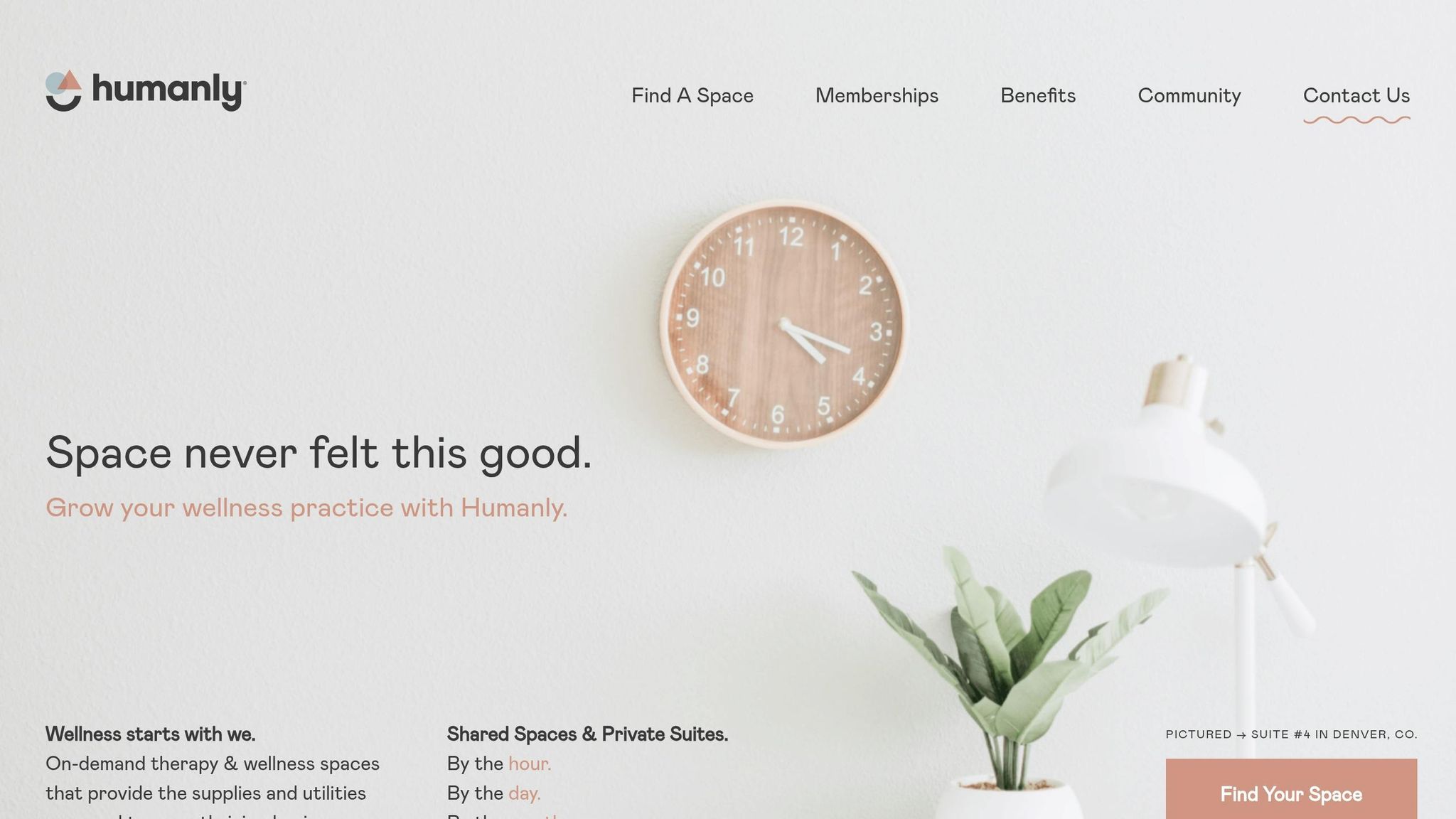
Feeling isolated in your practice? Humanly’s shared workspaces are designed to connect you naturally with other wellness professionals. Their Community Rooms and Offices bring together a diverse group of specialists – like counselors, nutritionists, and more – creating a space for organic, low-pressure networking. As Humanly emphasizes, "Wellness starts with we," highlighting their focus on collaboration and peer referrals.
Therapist Julia W. sheds light on the importance of these connections:
"The majority of therapists’ caseloads is built from referrals. These referrals more often than not are gained from networking with peers and professionals working in related fields".
By surrounding yourself with professionals from various specialties, you can build a strong referral network that supports your practice.
Humanly operates in several locations, including Denver, Stamford, and Midtown Atlanta, offering flexible membership options to suit your needs. For instance:
These options not only provide workspace flexibility but also integrate seamlessly with Humanly’s in-house referral system, making it easier to connect clients with the right specialist.
Michelle Muñoz, LMFT, highlights the value of this professional community:
"Private practice can feel very isolating, so make sure to create a professional community for yourself… Having a supportive community to turn to for advice in those times helps you be a better clinician".
Once you’ve established connections, the next step is to nurture them with timely and thoughtful follow-ups. While initial introductions open the door, it’s the follow-up that transforms brief exchanges into meaningful professional relationships.
Reach out promptly after meeting someone. Review your notes or business cards right after the event, and when sending a LinkedIn invite or email, make it personal. Mention one or two specifics from your conversation instead of using a generic message. This personal touch shows genuine interest and sets the stage for a collaborative relationship.
After your initial outreach, focus on staying connected by offering something valuable. Share helpful insights, send relevant articles, or introduce them to someone in your network who might be of help. Engage with their content by commenting on their posts – it’s a subtle way to stay on their radar without being pushy. As Audrey Schoen, LMFT, explains:
"Networking isn’t about selling yourself – it’s about building relationships".
Reciprocity is key in networking. Referring clients or opportunities to your connections increases the likelihood they’ll do the same for you – it’s a give-and-take dynamic. To maintain consistent contact, consider a monthly newsletter to share updates and insights with your network without needing to reach out individually.
Finally, don’t underestimate the power of a thank-you note. If someone sends you a referral, take the time to send a personalized message of gratitude. As Julia W. advises:
"If one of your connections sends you a referral, make sure to send them a personalized note thanking them for the referral".
This small but meaningful gesture reinforces the relationship and encourages future collaborations.
Building a successful wellness practice through online networking boils down to one key idea: relationships matter more than transactions. As Michaela Bucchianeri, PhD, LP, explains:
"At its core, networking is simply about relationships".
When you focus on genuine connections rather than just generating leads, networking becomes less overwhelming and much more rewarding.
The strategies discussed – like fine-tuning your LinkedIn profile, participating in niche communities, and following up thoughtfully – are most effective when done with consistency and care. You don’t need to do it all. Even small, regular efforts, such as a quick virtual coffee chat or leaving a thoughtful comment on a colleague’s post, can lead to meaningful relationships over time. These small actions, done consistently, lay the groundwork for strong, lasting professional connections.
It’s not about how many people you know, but how well you know them. A handful of deep, authentic relationships – whether with doctors, HR managers, nutritionists, or other professionals – can lead to more referrals and opportunities than a large network of surface-level contacts. Networking isn’t just about growing your practice; it’s about fostering trust and collaboration.
Take time to review your digital presence. Your website, LinkedIn profile, and social media should clearly communicate who you help and how to reach you. This makes it easier for your network to refer clients your way. When engaging with others, practice active listening, showing genuine interest in their goals, and offering helpful resources or introductions.
By focusing on these practical steps – polishing your online presence and prioritizing authentic connections – you’ll align with the article’s central message: meaningful relationships are the foundation of a thriving practice. Mariah Parker emphasizes:
"networking is a skill that you can improve with practice".
The connections you nurture today can support your professional journey and help combat the isolation that many private practitioners face. Start small, stay consistent, and let your network grow naturally.
The ideal platform for online networking as a wellness professional is one that prioritizes authentic connections and provides practical digital tools. Humanly stands out as a great option, offering a collaborative community of professionals, networking opportunities, and a referral system specifically designed for those in the wellness field. Beyond that, strengthening your online presence through platforms like LinkedIn, therapy directories, and social media can amplify your networking success.
To connect online without coming across as overly promotional, concentrate on forming genuine relationships based on empathy and mutual interests. Rather than pushing your services, take a sincere interest in what others are doing and look for ways to offer support. Build trust by being cooperative and thoughtful in your interactions. When you focus on trust and rapport instead of transactional or self-serving approaches, referrals and opportunities tend to happen organically.
A follow-up message works best when it focuses on creating meaningful connections and offering something helpful. Here’s an example you might use:
"Hi [Name], I truly enjoyed our recent conversation and found your thoughts on [specific topic] very insightful. I’d love to stay connected and see how we might collaborate or support each other’s goals. Don’t hesitate to reach out if there’s anything I can do to help or if you’d like to continue our discussion. Looking forward to keeping in touch!"
The key is to keep it warm, genuine, and open-ended.